
Losing teeth can affect much more than your smile. Missing teeth can make certain foods harder to eat, affect speech, and change how comfortable you feel in everyday situations. If you are considering tooth replacement, one of the most important decisions is choosing a solution that fits your oral health, lifestyle, and long-term needs.
Dental implants and dentures are two established options for replacing missing teeth, but they work in very different ways. Patients researching dental implants in Woodbridge and dentures may also come across implant-supported dentures, which combine elements of both approaches.
Understanding the differences can help you have a more informed conversation with your dentist and determine which option may be appropriate for your situation.
How Dental Implants and Dentures Work
Before comparing the benefits and limitations of each treatment, it helps to understand how they replace missing teeth.
How Dental Implants Work
A dental implant is a small titanium post that is surgically placed into the jawbone to replace the root of a missing tooth. During the healing process, the implant can integrate with the surrounding bone through a process called osseointegration.
Once the implant has healed sufficiently, an abutment and custom restoration, such as a crown, can be attached to restore the missing tooth.
Because the implant is anchored in the jawbone, it can provide stable support and a natural-looking appearance. Dental implants can be used to replace a single missing tooth, several teeth, or support a full-arch restoration depending on the patient’s needs.
If you are considering dental implants in Woodbridge, a dental assessment can help determine whether implants are appropriate and whether additional treatment, such as bone grafting, may be necessary.
How Dentures Work
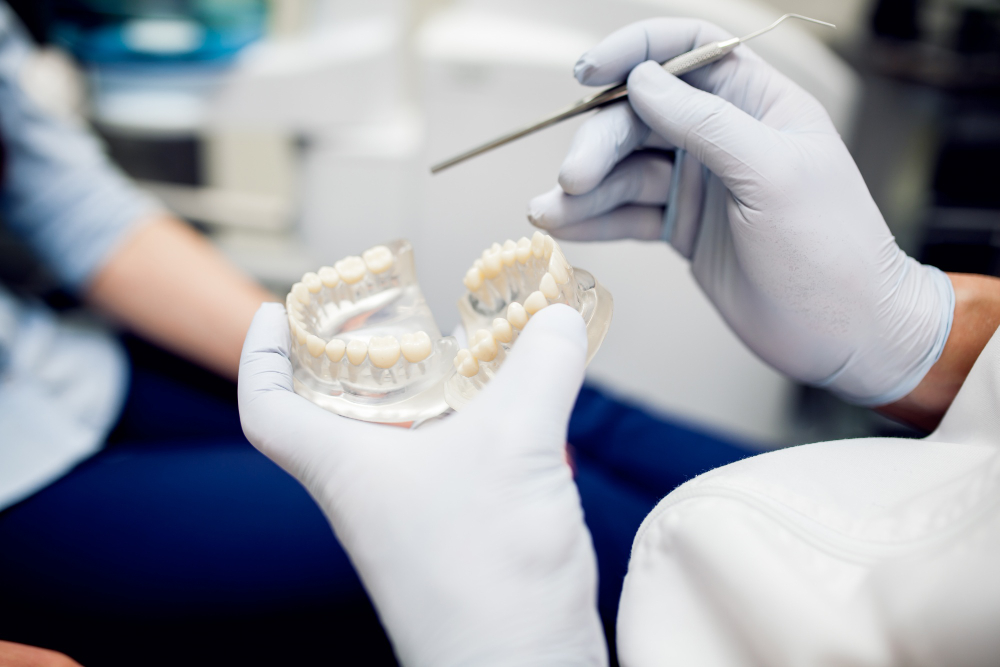
Dentures are removable dental appliances designed to replace missing teeth and surrounding tissue. Complete dentures replace all the teeth in an upper or lower arch, while partial dentures replace several missing teeth while using the remaining natural teeth for support.
Conventional dentures rest on the gums and are designed to remain in place through their fit and, in some cases, suction or denture adhesive.
Implant-supported dentures are another option. Instead of relying entirely on the gums for support, the denture attaches to dental implants placed in the jaw. This can improve stability and make the restoration feel more secure during everyday activities.
Patients researching denture options in Woodbridge may therefore have several solutions to consider rather than choosing only between traditional dentures and individual dental implants.
Dental Implants vs Dentures: Key Differences
Both treatments can replace missing teeth, but there are important differences in stability, maintenance, appearance, bone health, and treatment requirements.
Stability and Chewing Function
Stability is one of the most noticeable differences between conventional dentures and implants.
Dental implants are anchored into the jawbone, which means they are designed to remain stable while eating and speaking. This can make everyday activities feel more natural and comfortable.
Conventional dentures sit on the gums and may move slightly during eating or speaking, particularly if the fit changes over time. Lower dentures can be particularly challenging for some patients because the lower jaw provides less surface area for denture support.
Implant-supported dentures can provide more stability than conventional dentures because the implants help anchor the restoration. However, they are still different from individual implant-supported crowns and do not necessarily provide the same type of function.
The right option depends on factors such as the number of missing teeth, available bone, oral health, and personal preferences.
Bone Preservation
Jawbone changes are another important consideration when replacing missing teeth.
When a natural tooth is lost, the bone surrounding the former tooth root no longer receives the same stimulation. Over time, this can contribute to bone resorption and changes in the shape and volume of the jaw.
Dental implants can help preserve bone around the implant site because the implant provides stimulation through the jawbone in a way that conventional removable dentures cannot.
Dentures can still provide an effective solution for replacing missing teeth, but they do not replace the tooth root. As the jaw and gum tissues change over time, the fit of a denture may also change.
This is one reason regular dental appointments are important regardless of which tooth replacement option you choose.
Maintenance and Daily Care
Both implants and dentures require regular care, although the routines are different.
Dental implants should be cleaned regularly with brushing, flossing, and other cleaning methods recommended by your dental professional. Regular dental examinations and professional cleanings are also important for monitoring the health of the gums and tissues around the implant.
Dentures should be removed and cleaned regularly according to your dentist’s instructions. They may also require soaking or other cleaning methods to maintain hygiene and the condition of the appliance.
Partial dentures require additional attention because plaque can accumulate around the remaining natural teeth and denture components.
Good daily care and regular dental visits can help maintain both your oral health and the condition of your tooth replacement.
Appearance
Modern dental implants and dentures can both provide natural-looking results when properly planned and fitted.
An individual implant crown is designed to resemble a natural tooth in shape, colour, and proportion. Because the implant is supported within the jaw, the restoration can also provide a natural-looking appearance around the gumline.
Well-designed dentures can also restore the appearance of missing teeth and provide support for the lips and facial tissues. However, changes in the underlying gums and jawbone over time can affect the fit and appearance of a denture.
Your dentist can discuss the aesthetic considerations of each option based on your individual circumstances.
Cost and Long-Term Value
Cost is often an important part of the decision, but it should not be considered separately from treatment requirements and long-term maintenance.
Dental implants generally involve a higher initial investment because treatment can include implant placement, healing, abutments, and the final restoration. Some patients may also require additional procedures before implant placement.
Conventional dentures generally have a lower initial cost. However, dentures may require adjustments, relining, repairs, or replacement as the shape of the gums and jaw changes over time.
Implant-supported dentures can provide another option between conventional dentures and replacing every missing tooth with an individual implant. A smaller number of implants can be used to support a removable denture, potentially improving stability while using fewer implants than a full-mouth individual tooth replacement approach.
Rather than focusing only on the initial price, it is helpful to consider the treatment process, maintenance requirements, expected longevity, and the type of function you want from your tooth replacement.
Implant-Supported Dentures vs Conventional Dentures
For patients who are missing several or all of their teeth, implant-supported dentures may offer an alternative to conventional removable dentures.
Conventional dentures rest on the gums and rely on their fit, suction, and sometimes adhesive to remain stable. Implant-supported dentures attach to implants placed in the jaw, providing additional support.
Some potential differences include:
- Stability: Implant-supported dentures can be more secure during eating and speaking.
- Support: Implants provide anchorage that conventional dentures do not have.
- Removability: Depending on the treatment design, implant-supported dentures may still be removable for cleaning.
- Bone support: Implants can help preserve bone around the implant sites.
- Suitability: Not every patient is automatically a candidate for implant-supported treatment.
Patients considering implant denture options should have a dental examination to determine which type of restoration is appropriate for their oral health and available bone.
Who May Be Suitable for Dental Implants?
Many adults may be candidates for dental implants, but suitability varies from patient to patient.
During an assessment, your dentist may consider:
- The amount and quality of available jawbone
- The health of your gums
- The number and location of missing teeth
- Your general health and healing capacity
- Your oral hygiene habits
- Smoking and tobacco use
- Any medications or health conditions that may affect healing
Patients with insufficient bone may sometimes be candidates for bone grafting or other procedures before implant placement.
Age alone does not determine whether someone can receive implants. A clinical examination and appropriate dental imaging are needed to determine whether treatment is suitable.
If you are looking for an implant dentist Vaughan patients can consult, a personalized assessment is the best way to understand your available treatment options.
Who May Be Better Suited to Dentures?
Dentures can be an effective choice for many patients with missing teeth.
They may be considered by patients who:
- Need to replace several or all missing teeth
- Prefer a removable tooth replacement
- Want to avoid implant surgery
- Are not currently suitable candidates for implants
- Have health or anatomical factors that make implant treatment more complex
- Prefer a treatment approach that does not involve implant placement
Some patients may also choose dentures because they have used them successfully for years and are comfortable with their existing solution.
There is no single tooth replacement option that is ideal for everyone. The most appropriate choice depends on your oral health, treatment goals, preferences, and individual circumstances.
Frequently Asked Questions
Can dentures be converted to implant-supported dentures later?
In some cases, patients who initially receive conventional dentures may later choose implant-supported treatment. Whether an existing denture can be modified depends on its design, condition, fit, and the planned implant system. A dentist can assess whether the existing denture can be adapted or whether a new restoration would be more appropriate.
How long do dental implants last compared with dentures?
Dental implants can last for many years and, with proper care, the implant itself may remain functional for a very long time. However, the crown or other restoration attached to the implant may eventually require repair or replacement.
Dentures can also provide many years of service, but their fit may change as the gums and jawbone change over time. Adjustments, relining, repairs, or replacement may eventually be necessary.
The lifespan of either treatment depends on factors such as oral hygiene, bite forces, maintenance, general health, and the condition of the surrounding tissues.
Are dental implants painful?
Dental implant placement is performed using local anaesthesia, so patients should not feel pain during the procedure itself. Some soreness, swelling, or tenderness may occur during the healing period.
Your dental team can provide aftercare instructions and recommend appropriate pain management based on your individual needs.
Will dentures affect how I speak?
New dentures can feel different at first, and some patients experience temporary changes in speech while they adjust. With practice and regular use, many people become comfortable speaking with their dentures.
Implant-supported dentures may provide additional stability, which can make speaking more comfortable for some patients.
Does insurance cover dental implants or dentures in Ontario?
Coverage varies considerably between dental insurance plans. Some plans may provide benefits toward dentures, while implant-related treatment may have limited or no coverage.
Before beginning treatment, review your insurance policy and speak with your insurance provider about what is covered. Your dental office can also explain the treatment involved and help you understand the fees associated with your recommended care.
Making the Right Choice for Your Smile
Dental implants Woodbridge and dentures can both provide effective solutions for missing teeth, but they approach tooth replacement in different ways.
Dental implants offer fixed support within the jaw and can help preserve bone around the implant site. Conventional dentures provide a removable option that can replace several or all missing teeth without implant surgery. Implant-supported dentures offer another alternative for patients who want additional stability from a removable restoration.
The most suitable choice depends on your oral health, the number of missing teeth, bone availability, lifestyle, treatment preferences, and long-term goals.
A thorough dental assessment is the best way to understand which options are available to you and what each treatment would involve. At West Vaughan Dental, you can discuss your tooth replacement options and receive personalized guidance based on your dental needs. Contact West Vaughan Dental to arrange a consultation.