

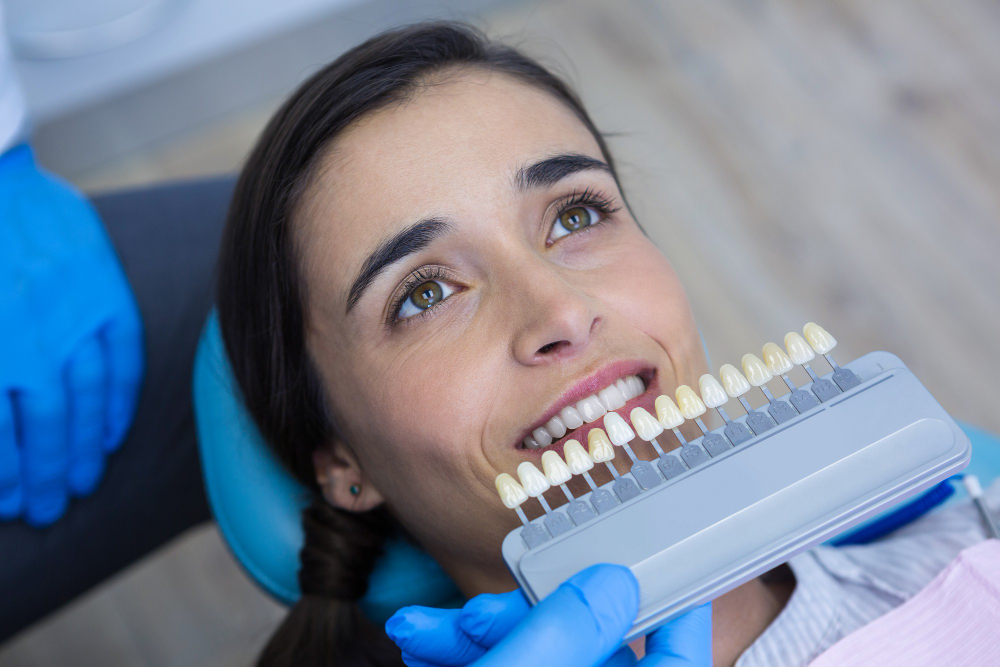
Veneers have become one of the most popular cosmetic dental treatments available and for good reason. They can transform the appearance of teeth that are chipped, discoloured, uneven, or poorly proportioned and deliver results that look completely natural when done well.
What many patients do not realize when they start researching veneers is that there are two distinct types available, porcelain and composite, and the differences between them go well beyond price. They involve different materials, different procedures, different lifespans, and different levels of suitability depending on the patient’s specific situation and goals.
This guide is written for patients in Woodbridge and Vaughan who are considering porcelain veneers Woodbridge or composite veneers and want an honest, practical comparison before making any decisions.
What Are Porcelain Veneers?
Porcelain veneers Woodbridge are thin shells of dental ceramic custom-fabricated in a laboratory to fit over the front surface of a tooth. Each veneer is individually designed to match the shape, size, and colour agreed upon during the planning process and is bonded permanently to the tooth using a specialized dental cement.
The procedure involves removing a thin layer of enamel from the front surface of each tooth to create space for the veneer to sit flush with the surrounding teeth. Because enamel is removed, the decision to have porcelain veneers is permanent. The tooth will always require some form of covering going forward.
The fabrication process takes place in a dental laboratory and typically requires two appointments. At the first appointment, the teeth are prepared, impressions are taken, and temporary veneers are placed to protect the teeth while the permanent ones are being made. At the second appointment, the permanent veneers are tried in, adjusted where necessary, and bonded into place.
What Are Composite Veneers?
Composite veneers use a tooth coloured resin material, the same material used for tooth coloured fillings, applied directly to the front surface of the tooth by the dentist. The resin is built up in layers, shaped, and polished to create the desired appearance in a single appointment.
Unlike porcelain veneers, composite veneers can often be completed without removing any enamel, though a small amount of preparation may be needed in some cases depending on the extent of the change being made.
Because composite veneers are applied directly rather than fabricated in a laboratory, the entire process can typically be completed in one visit.
Porcelain Veneers vs Composite Veneers: The Key Differences
Appearance
Both options can produce natural-looking results, but there are meaningful differences in the quality of the aesthetic outcome.
Porcelain veneers Woodbridge offer a superior aesthetic result in most cases. Dental porcelain has optical properties that closely mimic natural tooth enamel. It reflects light in a way that is virtually indistinguishable from a natural tooth surface. The translucency and depth of colour that can be achieved with porcelain are difficult to replicate with composite resin.
Composite resin can produce very good results, particularly in skilled hands, but it does not match the optical quality of porcelain. Under certain lighting conditions, composite veneers may appear slightly more opaque or less lifelike than porcelain. The surface of composite resin is also more susceptible to staining over time, which gradually affects the appearance of the restoration.
For patients whose primary concern is achieving the most natural-looking and aesthetically refined result possible, porcelain veneers in Vaughan represent the higher standard of the two options.
Durability and Lifespan
Porcelain veneers in Woodbridge typically last between 10 and 15 years with proper care, and many patients keep them considerably longer. Porcelain is a hard, stain-resistant material that holds its appearance well over time when maintained correctly.
Composite veneers have a shorter lifespan, typically between five and seven years before they need to be replaced or significantly repaired. Composite resin is softer than porcelain and more susceptible to chipping, wearing, and staining over time. Patients who consume staining foods and drinks regularly or who have habits such as nail biting or teeth grinding will find composite veneers show wear and discolouration more quickly.
Over a 15 to 20 year period, the total cost of replacing composite veneers multiple times can approach or exceed the upfront cost of porcelain, which is a consideration worth factoring into the financial comparison.
Cost
Composite veneers have a significantly lower upfront cost than porcelain veneers in Woodbridge. This makes them more accessible for patients who want to improve their smile but are working within a tighter budget or who want to trial the result before committing to a more significant investment.
Porcelain veneers involve laboratory fabrication costs in addition to the clinical costs of the procedure, which makes them considerably more expensive per tooth. However, the longer lifespan and superior aesthetic quality of porcelain mean that the cost per year of service over the lifespan of the restoration is often more comparable to composite than the initial price difference suggests.
Procedure and Reversibility
This is one of the most clinically significant differences between the two options.
Composite veneers can often be placed with little or no removal of tooth enamel. This means that in many cases the procedure is reversible. If a patient decides they want to change their composite veneers or remove them entirely, the underlying tooth structure is largely intact.
Porcelain veneers in Woodbridge require the removal of a thin but permanent layer of enamel. This makes the procedure irreversible. The tooth will always need to be covered by some form of restoration going forward. This is not a reason to avoid porcelain veneers when they are the right choice, but it is an important consideration that patients should fully understand before proceeding.
For patients who are uncertain about committing to a permanent change or who want to preview the result before making a final decision, composite veneers offer a lower-risk entry point. It is entirely possible to start with composite veneers and transition to porcelain veneers at a later stage.
Repair and Maintenance
Composite veneers can be repaired relatively easily if they chip or develop a rough surface. Additional composite resin can be bonded to the existing restoration and polished to restore the appearance without replacing the entire veneer.
Porcelain cannot be bonded to itself in the same way. A significant chip or crack in a porcelain veneer typically requires replacement of the entire veneer rather than a simple repair. Minor surface issues can sometimes be polished, but structural damage generally means fabricating a new veneer.
Stain Resistance
Porcelain veneers Woodbridge are highly stain resistant. The glazed surface of the porcelain does not absorb pigments from food and drinks in the way that natural enamel does. This means that the colour of a porcelain veneer remains stable over time even with regular consumption of coffee, tea, or red wine.
Composite resin is more porous than porcelain and is susceptible to gradual staining over time, particularly at the surface and edges of the restoration. Patients with composite veneers who consume staining foods and drinks regularly will notice that the material gradually takes on a slightly yellower or greyer appearance over the years.
Which Option Is Right for Which Patient?
Neither option is universally better. The right choice depends on the individual patient’s clinical situation, aesthetic goals, budget, and lifestyle.
Porcelain veneers are generally the better choice for patients who want the highest quality aesthetic result, who are making a long-term investment in their smile, who have significant cosmetic concerns that require a more refined solution, and who understand and accept the permanent nature of the procedure.
Composite veneers are generally the better choice for patients who want to improve their smile at a lower upfront cost, who prefer a reversible or less invasive approach, who want to preview the result before committing to porcelain, who have minor cosmetic concerns that do not require the full capabilities of porcelain, or who are younger patients whose dental needs may continue to evolve.
A consultation with an experienced cosmetic dentist in Woodbridge is the most reliable way to determine which option is appropriate for your specific teeth and goals. The condition of the underlying teeth, the extent of the cosmetic changes needed, and the patient’s bite all factor into the clinical recommendation.
Can Composite Veneers Be Upgraded to Porcelain Later?
Yes. Many patients begin with composite veneers as a starting point and choose to transition to porcelain veneers in Woodbridge at a later stage. This staged approach allows patients to experience the improvement in their smile before making a larger financial commitment and gives them time to confirm that veneers are the right long-term solution for them.
The transition from composite to porcelain is straightforward in most cases. The composite is removed, the teeth are assessed, and the process for porcelain veneers proceeds as it would for any new patient. There is no clinical disadvantage to this approach for most patients.
Protecting Your Veneers Regardless of Type
Whether you choose porcelain veneers in Woodbridge or composite, the same basic principles apply to protecting and maintaining them.
Brush twice daily with a soft-bristled toothbrush and a non-abrasive toothpaste. Abrasive products can scratch both porcelain and composite surfaces over time, dulling their appearance.
Floss daily around each veneered tooth, paying attention to the gumline to keep the surrounding gum tissue healthy.
Wear a custom night guard if you grind or clench your teeth. Both porcelain and composite are vulnerable to the excessive forces generated by bruxism, though porcelain is more likely to fracture under extreme pressure while composite is more likely to wear down gradually.
Attend regular checkups at your dental clinic in Woodbridge, so your dentist can monitor the condition of the veneers and the underlying tooth structure at each visit.
Avoid using the veneered teeth to bite into very hard foods, open packaging, or bite nails. These habits place unnecessary stress on the restorations regardless of the material.
For patients who want to understand more about the full range of cosmetic options available, the cosmetic dentistry Vaughan page provides a useful overview of treatments that can be considered individually or in combination.
Frequently Asked Questions
Can I whiten my teeth after getting veneers?
Whitening treatments do not change the colour of either porcelain or composite veneers. If you are considering whitening, it is worth doing so before veneer placement so the veneers can be matched to your whitened shade. Whitening after veneer placement can create a colour mismatch between the veneers and the surrounding natural teeth.
Do veneers damage the underlying teeth?
Porcelain veneers require the removal of a thin layer of enamel, which is permanent. However, the procedure does not damage the structural integrity of the tooth when carried out correctly. Composite veneers applied without enamel removal do not alter the underlying tooth at all. Both options, when properly placed and maintained, are compatible with long-term tooth health.
How do I know if my teeth are suitable for veneers?
Veneers are most suitable for teeth that are structurally sound with no active decay or significant gum disease. Patients with very short teeth, significant misalignment, or heavy grinding habits may not be ideal candidates for veneers without addressing these issues first. A clinical assessment at a cosmetic dentist Woodbridge practice will confirm suitability.
Will veneers look natural?
Yes, when well made and properly matched to the surrounding teeth. Porcelain veneers in particular are extremely difficult to distinguish from natural teeth because of the optical properties of the material. The skill of the dentist and the quality of the laboratory work both play a significant role in the natural appearance of the final result.
Can veneers fix crooked teeth?
Veneers can address the appearance of mild misalignment by reshaping and repositioning the visible surface of the tooth. They are not a substitute for orthodontic treatment in cases of significant misalignment or bite issues. For patients with more pronounced alignment concerns, discussing orthodontic treatment in Woodbridge before or alongside veneers may produce a better overall result.
Making an Informed Choice for Your Smile
Porcelain veneers in Woodbridge and composite veneers both offer a genuine improvement in the appearance of the smile, but they do so in different ways and with different implications for longevity, cost, and the procedure itself. Understanding those differences clearly is what allows you to make a decision that genuinely serves your long-term goals rather than simply responding to the upfront price difference.
At West Vaughan Dental, the team is here to help you understand which option is right for your specific teeth and goals. Learn more about porcelain veneers in Woodbridge or get in touch through our Contact Us page to book a consultation.