

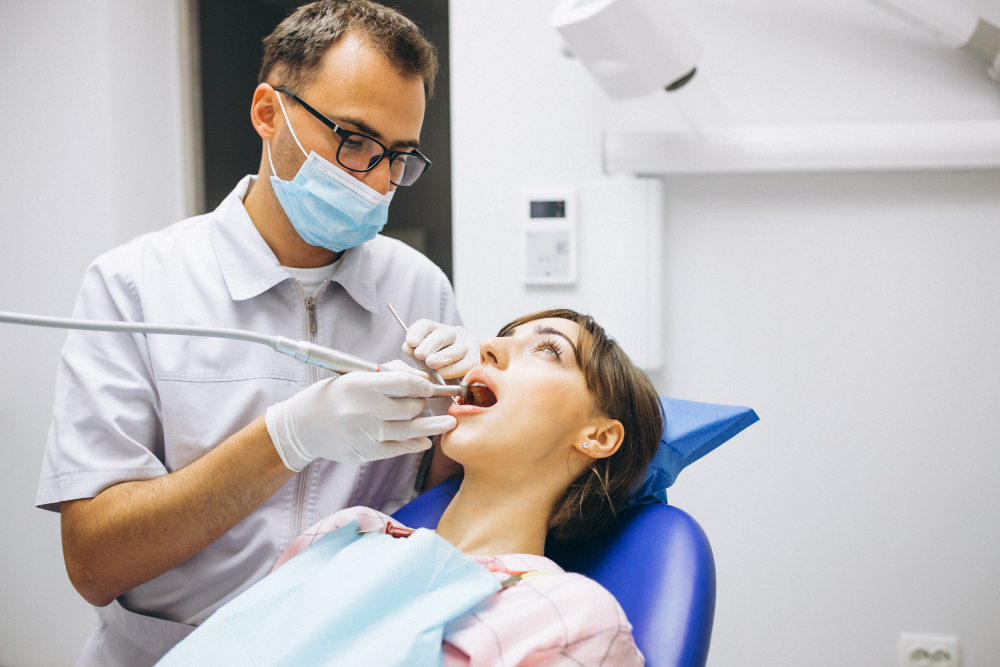
Dental anxiety is more common than most people realize and more varied in its intensity than the term suggests. For some patients, it is a mild nervousness before appointments that fades once they are in the chair. For others it is a persistent dread that builds for days beforehand and makes every appointment a significant ordeal. For a smaller but meaningful proportion of patients, it is a genuine phobia that has led to years or even decades of avoiding dental care entirely.
If you recognize yourself in any of those descriptions, you are far from alone. Estimates suggest that between 50 and 80 percent of adults experience some degree of dental anxiety and that between 10 and 15 percent avoid dental care altogether because of fear. The consequences of prolonged avoidance are real and significant. Dental problems that could have been caught and treated simply at a routine appointment become more complex and more costly the longer they are left.
This guide is written for patients in Woodbridge and Vaughan who want to find a way to manage their dental anxiety and get the care their oral health needs. It covers where dental fear comes from, the spectrum of how it presents, and most importantly what practically works to make dental appointments more manageable.
Where Dental Fear Comes From
Understanding the origin of dental anxiety helps make sense of why it is so persistent and why telling yourself it is irrational rarely makes it go away.
Past Negative Experiences
The most common root of dental anxiety is a previous negative experience, often in childhood. A painful procedure, a dentist who was impatient or dismissive, feeling out of control during treatment, or simply being frightened without adequate explanation are all experiences that leave lasting impressions. The brain encodes these experiences as threats and responds with the same fear response when similar situations arise in the future, regardless of how much time has passed or how different the current dentist may be.
Fear of Pain
Fear of pain is the most frequently cited specific concern among anxious dental patients. This fear is often disproportionate to the actual level of discomfort involved in modern dental treatment, particularly for patients whose reference point is an experience from years or decades ago when techniques and anaesthetics were less refined. However, knowing that the fear is disproportionate does not make it less real or less powerful in the moment.
Fear of Loss of Control
Lying back in a dental chair with someone working in your mouth is an inherently vulnerable position. Patients cannot see what is happening, cannot easily speak to communicate discomfort, and feel dependent on the dentist to stop if they need a break. For patients who are particularly sensitive to situations where they feel a loss of control, this dynamic alone can trigger significant anxiety regardless of the specific procedure involved.
Fear of Needles and Injections
Fear of needles is extremely common in the general population, and dental injections are a specific trigger for many anxious patients. The anticipation of the injection is often considerably more distressing than the injection itself, particularly with modern anaesthetic techniques that include topical numbing gel applied before the needle is used.
Embarrassment and Shame
Patients who have avoided dental care for an extended period often carry a layer of shame about the state of their teeth and fear being judged by the dental team. This embarrassment becomes an additional barrier on top of the original anxiety. The longer care is avoided, the more shame accumulates and the harder it becomes to take the first step back.
Sensory Sensitivities
The sounds, smells, and physical sensations associated with a dental appointment are specific triggers for some patients. The sound of the drill, the smell of the clinical environment, the taste of dental materials, and the physical sensation of instruments in the mouth can all trigger anxiety responses in patients who have developed an association between these sensory inputs and past negative experiences.
The Spectrum of Dental Anxiety
Dental anxiety is not a single uniform experience. It exists on a spectrum, and the strategies that help vary depending on where on that spectrum a patient sits.
Mild to moderate anxiety is the most common presentation. These patients feel nervous before appointments, may have elevated stress in the waiting room, and find certain procedures more difficult than others. With the right communication and a few practical strategies, most patients in this category can manage their appointments effectively and maintain regular dental care.
Moderate to severe anxiety describes patients for whom appointments are a significant ordeal that causes meaningful disruption to their daily life in the days beforehand and significant distress during treatment. These patients may cancel appointments at the last minute, need considerable support during treatment, and find that standard reassurance is insufficient. Additional strategies, including sedation options, may be appropriate for this group.
Dental phobia is the most severe presentation and is characterized by an intense, irrational fear that results in complete avoidance of dental care. Patients with a genuine dental phobia may not have seen a dentist in years or decades and may require a graduated, carefully managed approach to re-engaging with dental care. In some cases, working with a mental health professional alongside a sympathetic dental team is the most effective approach.
Practical Strategies That Actually Work
Tell Your Dentist About Your Anxiety
This is the single most important and most consistently effective step. Dental teams at a dentist in Woodbridge, Ontario are accustomed to working with anxious patients. They cannot adapt their approach to your needs if they do not know what those needs are.
Be specific about what you find most difficult. Is it the injections? The sounds? Feeling like you cannot communicate during treatment? Not knowing what is happening next? The more specific you can be, the more effectively your dentist can adjust their approach to address your particular concerns.
Establishing a signal, such as raising your hand, that means stop immediately and give me a moment is one of the most effective tools for managing the loss of control that many anxious patients find particularly difficult. Knowing that you can stop the procedure at any moment without having to speak or interrupt gives you a degree of control that significantly reduces anxiety for many patients.
Ask for a Familiarization Visit First
If you have been avoiding dental care for a significant period, booking a visit that involves no clinical treatment at all can be an effective first step. Many dental practices welcome this kind of appointment where you simply meet the team, see the environment, ask questions, and leave without anything being done to your teeth.
Removing the expectation of treatment from the first visit eliminates the most immediate source of anxiety and allows you to build a relationship with the dental team before any clinical interaction takes place. For patients who have been avoiding care for years, this kind of gradual re-entry is often more sustainable than trying to jump straight back into a full examination.
Bring a Support Person
Having a trusted friend or family member accompany you to appointments provides emotional support and a sense of safety. For some patients, simply having someone they trust in the waiting room is sufficient. Others benefit from having their support person in the treatment room with them. Ask the practice in advance whether this is possible.
Use Distraction Techniques
Distraction is one of the most accessible and effective tools for managing anxiety during dental treatment. Listening to music or a podcast through headphones during the procedure gives your mind something to focus on other than what is happening in your mouth. Many patients find that even a significant reduction in their awareness of the sounds of the treatment makes a meaningful difference to their anxiety level.
Focusing on slow, controlled breathing during the procedure is another effective distraction technique. Breathing in for four counts, holding for two, and breathing out for four counts activates the parasympathetic nervous system and physiologically reduces the stress response. It also gives your mind something specific to focus on rather than anticipating what might happen next.
Some patients find that squeezing a stress ball or focusing attention on a fixed point on the ceiling helps maintain a sense of grounding during treatment.
Understand What Is Going to Happen
Uncertainty amplifies anxiety. Knowing in advance exactly what a procedure involves, what sensations to expect, and how long it will take removes a significant source of anticipatory fear. Ask your dentist to explain each step before they do it during the appointment. Ask them to tell you what you will feel, hear, and experience at each stage rather than simply proceeding without explanation.
Many patients find that the reality of a procedure is considerably less uncomfortable than their imagination had predicted. Bridging the gap between anticipated and actual experience through clear communication and explanation is one of the most effective anxiety management tools available.
Schedule Thoughtfully
The time of day and day of the week you schedule your appointment can affect your anxiety level. Most patients find that morning appointments work better than afternoon ones because there is less time during the day for anticipatory anxiety to build. The first appointment of the day also means no waiting beyond the scheduled time due to the clinic running behind.
Avoid scheduling appointments on days when you are already under significant stress from other commitments. Arriving at a dental clinic in Woodbridge when you are already anxious about something else compounds the overall stress response.
Allowing plenty of time to arrive at the appointment without rushing is also worth noting. The physiological arousal of rushing- elevated heart rate and heightened alertness- is very similar to the physiological state of anxiety, and arriving in this state makes it harder to settle once you are in the chair.
Consider Sedation Options
For patients with moderate to severe anxiety, sedation options can make the difference between being able to access dental care and continuing to avoid it. The options available vary between practices and depending on the procedures involved.
Nitrous oxide, commonly known as laughing gas, is administered through a small mask over the nose during the procedure. It produces a pleasant feeling of relaxation and mild dissociation without putting the patient to sleep. The effects wear off within minutes of removing the mask, and most patients can drive themselves home afterward.
Oral sedation involves taking a prescribed sedative medication before the appointment. It produces a deeper level of relaxation than nitrous oxide, and many patients have little memory of the procedure afterward. It requires someone to drive the patient home, and the effects last several hours.
Intravenous sedation produces a deeper state of conscious sedation and is used for more complex procedures or patients with severe anxiety. It is administered and monitored by a trained professional and requires more significant recovery time.
Ask your family dentist in Vaughan what sedation options are available at the practice and whether they are appropriate for your level of anxiety and the procedures you need.
Work on the Anxiety Between Appointments
For patients with significant dental anxiety, managing the fear only at the point of the appointment is treating the symptom rather than the cause. Working on the anxiety between appointments through evidence-based approaches produces more lasting change.
Cognitive behavioural therapy has a strong evidence base for treating specific phobias, including dental phobia. A trained therapist can help you identify and challenge the thought patterns that drive your anxiety and develop more effective responses to dental-related triggers.
Gradual exposure, either self-directed or guided by a therapist, involves progressively exposing yourself to dental-related stimuli in a controlled way, starting with the least anxiety-provoking elements and working toward the most difficult. This approach, when done consistently, reduces the intensity of the fear response over time.
Mindfulness practice, maintaining focused awareness of the present moment without judgment, reduces the anticipatory anxiety that often makes dental appointments harder than the appointments themselves. Patients who develop a consistent mindfulness practice tend to manage dental anxiety more effectively than those who try to manage it only in the moment.
Re-engaging With Dental Care After a Long Absence
For patients who have avoided a Woodbridge dental clinic for years, the prospect of returning can feel overwhelming for several reasons simultaneously. There is the anxiety about the appointment itself, the shame about how long care has been avoided, and the fear of being judged or lectured by the dental team.
It is worth stating clearly that dental teams are not in the business of judging patients for the state of their teeth or the length of time since their last visit. A dentist who has been practicing for any length of time has seen every conceivable situation and is focused on helping you move forward rather than dwelling on the past.
The most important step is simply making contact with the practice and being honest about your situation. A brief conversation with the reception team or a note when booking explaining that it has been a long time and that you experience dental anxiety sets the stage for a first appointment that is handled with the sensitivity the situation requires.
Frequently Asked Questions
Is it normal to feel anxious about dental appointments even as an adult?
Completely normal. Dental anxiety affects adults of all ages and backgrounds. It is not a sign of weakness or irrationality. The brain responds to perceived threats based on experience and conditioning rather than logical assessment, and dental anxiety follows the same pattern as any other anxiety response.
What should I do if I feel panicked during a procedure?
Use the stop signal you agreed with your dentist before the appointment began. Raise your hand; the dentist will stop immediately and give you time to collect yourself. Focus on slow, controlled breathing. Let the dental team know how you are feeling. A good dental team will not rush you or make you feel that taking a moment is an imposition.
Can children develop dental anxiety from their parents?
Yes. Children are highly attuned to parental anxiety and can adopt their parents’ fear responses around dental care. Parents who are anxious about dental visits are advised to be mindful of how they discuss dental appointments in front of their children and to avoid expressing their own fear in ways that might influence how their child perceives dental care.
How do I find a dentist who is experienced with anxious patients?
Ask directly when contacting practices. A practice that is genuinely experienced with anxious patients will have a clear and confident answer to this question and will not make you feel that your concern is unusual or inconvenient. Reading patient reviews that specifically mention anxiety management can also give you a useful indication of how a practice handles nervous patients.
Will my dentist judge me for not having been to the dentist in a long time?
No. Dental professionals understand that anxiety, life circumstances, and various other factors lead patients to delay care, and they are focused on helping you move forward rather than dwelling on the past. Being honest about how long it has been and why allows the dental team to approach your care with the sensitivity and patience the situation requires.
Taking the First Step Is the Hardest Part
Dental anxiety is real, it is common, and it is manageable. The patients who find their way through it are not the ones who simply decide one day not to be afraid anymore. They are the ones who take one small step toward care despite the fear, communicate honestly with their dental team, and discover over time that the reality of modern dental care is considerably more manageable than their anxiety had led them to believe.
The consequences of avoiding dental care compound over time. Problems that are simple and inexpensive to treat at an early stage become more complex and more significant the longer they are left. Every year of avoidance makes the eventual return harder and the treatment more involved.
If dental anxiety has been keeping you away from a dentist in Woodbridge, Ontario, the most important thing you can do for your oral health and your overall well-being is to take one step toward care today. It does not have to be a full appointment. It can be a phone call, an email, or a visit just to meet the team.
At West Vaughan Dental, the team understands that dental anxiety is real and takes it seriously. Every patient is treated with patience, respect, and without judgment, regardless of how long it has been since their last visit. Learn more about Dentist Woodbridge Ontario or get in touch through our Contact Us page to take that first step.