

If your teenager has been told they need orthodontic treatment, the next question comes quickly: braces or Invisalign? It is a decision many Woodbridge families are navigating right now, and the answer is not the same for every child.
Both options straighten teeth effectively. Both are widely used and clinically proven. But they work differently, they feel different to wear, and they suit different lifestyles and dental situations. Understanding those differences clearly is what helps parents and teens make a choice they feel confident about.
This guide breaks down everything you need to know about orthodontic treatment in Woodbridge so you can walk into your consultation prepared.
How Traditional Braces Work
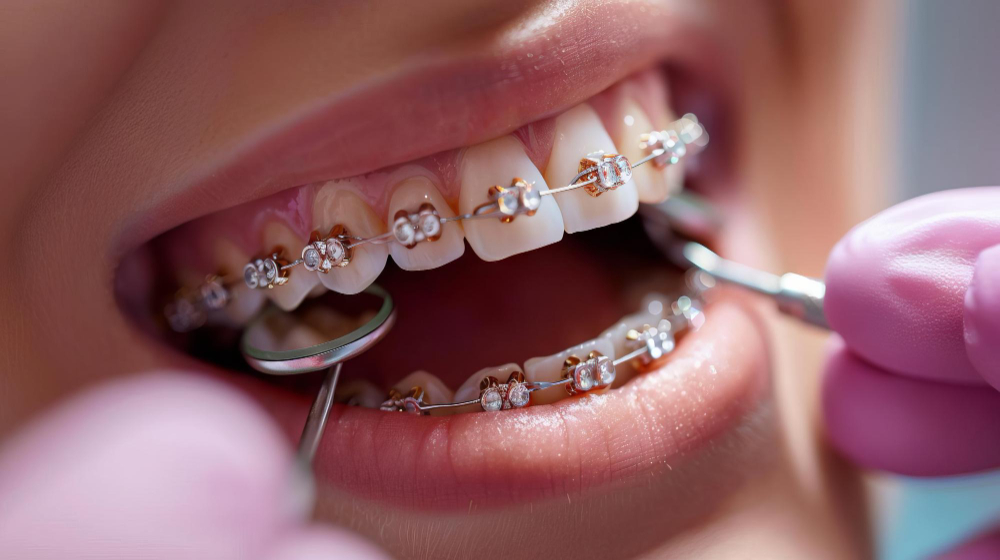
Traditional braces use a system of metal brackets bonded directly to the teeth and connected by a wire that is periodically tightened. This consistent pressure gradually moves teeth into their correct positions over time.
Braces are fixed. They stay on the teeth throughout the entire treatment period and cannot be removed by the patient. Adjustments are made at regular appointments, typically every four to six weeks, where the orthodontist tightens or changes the wire to continue progressing tooth movement.
Modern braces are considerably smaller and more comfortable than older versions. Ceramic braces are also available for patients who prefer a less visible option while still using a fixed appliance.
How Invisalign Works
Invisalign uses a series of custom-made clear plastic aligners that fit snugly over the teeth. Each set of aligners is worn for approximately one to two weeks before moving on to the next set in the series. Each new aligner moves the teeth incrementally closer to their final position.
Unlike braces, Invisalign aligners are removable. Patients take them out to eat, drink anything other than water, brush, and floss. They need to be worn for a minimum of 20 to 22 hours per day to achieve the expected results on schedule.
Treatment progress is monitored through regular check-in appointments, though these tend to be less frequent than traditional braces adjustment visits.
Key Differences Between Invisalign and Braces
Appearance
This is the factor most teenagers raise first. Invisalign aligners are virtually invisible when worn, which many teens prefer for social and confidence reasons. Traditional metal braces are clearly visible, though ceramic options reduce this concern to some degree.
For teens who are self-conscious about their appearance during treatment, Invisalign tends to be the more comfortable choice from a social perspective.
Comfort
Both options cause some discomfort, particularly in the early stages of treatment and after adjustments or aligner changes. Braces can cause irritation to the inside of the cheeks and lips due to the brackets and wires. Invisalign aligners have smooth edges and generally cause less soft tissue irritation, though some patients find the pressure of a new aligner uncomfortable for the first day or two.
Discipline and Compliance
This is one of the most important practical differences for teenagers specifically. Because Invisalign aligners are removable, the results depend heavily on the patient wearing them consistently for the required hours each day. Teens who are likely to remove the aligners frequently or forget to put them back in will not progress on schedule and may end up with a longer treatment time than necessary.
Traditional braces remove this variable entirely. Because they are fixed, they are working around the clock regardless of patient compliance. For some teenagers, this actually makes braces the more reliable choice.
Eating and Oral Hygiene
With traditional braces, certain foods need to be avoided throughout treatment. Hard, sticky, or chewy foods can damage brackets or get trapped in the wires. Cleaning around braces requires more effort and specific tools such as interdental brushes or floss threaders.
Invisalign aligners are removed during meals, so there are no food restrictions. Brushing and flossing remain straightforward since the teeth are fully accessible. However, patients must clean their teeth before reinserting aligners to avoid trapping food or bacteria against the enamel.
Treatment Complexity
Traditional braces can address a wider range of orthodontic cases, including more severe misalignment, significant bite issues, and complex tooth movements. Invisalign has advanced considerably and now treats many cases that previously required braces, but there are still situations where fixed appliances remain the more effective clinical choice.
Your dentist will assess the specific complexity of your teenager’s case before recommending which option is appropriate. Not every patient is a suitable candidate for Invisalign, and this is determined through clinical examination rather than personal preference alone.
What Is the Right Age for Orthodontic Treatment?
Most orthodontic treatment for teenagers begins between the ages of 11 and 14, when most of the permanent teeth have erupted, and the jaw is still developing. Starting during this window often means treatment is more efficient and results are more stable.
That said, orthodontic treatment is not limited to teenagers. Adults can and do undergo treatment successfully with both braces and Invisalign. If your child missed this window, it does not mean the opportunity has passed.
Early assessment is always worthwhile. A dentist can identify developing alignment issues and advise on the best time to begin treatment for each patient.
How Long Does Treatment Take?
Treatment duration varies depending on the complexity of the case and the type of treatment chosen.
Traditional braces typically take between 18 months and 3 years for most teenage patients. Invisalign treatment for teens generally falls in a similar range, though simpler cases can sometimes be completed in 12 to 18 months.
Compliance plays a significant role in Invisalign timelines. Patients who wear their aligners consistently as prescribed tend to finish on schedule. Those who do not often find their treatment takes longer than originally estimated.
What Happens After Treatment Ends?
Retainers are an essential part of orthodontic treatment regardless of which option was used. Once the active phase of treatment is complete, teeth have a natural tendency to shift back toward their original positions. Wearing a retainer as directed prevents this from happening and protects the results achieved during treatment.
Retainers may be removable or fixed, depending on the case and your dentist’s recommendation. Consistent retainer wear is what makes orthodontic results last long term. This is something worth discussing during your consultation so your teenager understands the commitment extends beyond the active treatment period.
FAQ
Is Invisalign suitable for all teenagers?
Not always. Invisalign works well for mild to moderate alignment and bite issues. More complex cases may still require traditional braces. A clinical assessment is the only reliable way to determine which option is appropriate for your teenager’s specific situation.
Does Invisalign hurt more than braces?
Both options involve some discomfort, particularly at the start of treatment and when progressing to a new aligner or after a wire adjustment. The type of discomfort differs. Braces can cause soft tissue irritation, while Invisalign tends to cause pressure-related discomfort when switching to a new aligner set.
Can teenagers play sports with braces or Invisalign?
Yes, with both options. Teenagers with braces should wear a mouthguard during contact sports to protect against injury from the brackets and wires. Invisalign aligners can be removed during sports if preferred, though a mouthguard is still recommended for contact activities.
How much does orthodontic treatment cost in Woodbridge?
Costs vary depending on the complexity of the case, the type of treatment, and the clinic. Invisalign tends to cost slightly more than traditional braces in most cases. Your dentist will provide a clear cost estimate during your consultation.
What happens if my teenager loses an Invisalign aligner?
Replacement aligners can be ordered, but there may be an additional cost involved. Teens who tend to misplace things may find traditional braces a more practical option for this reason alone.
Final Thought
Choosing between Invisalign and traditional braces comes down to your teenager’s specific dental needs, their lifestyle, and their level of responsibility with a removable appliance. Neither option is universally better. Both deliver excellent results when they are the right fit for the patient and when treatment is followed through properly.
The most important step is getting a proper clinical assessment, so the recommendation is based on what will actually work best for your child rather than on preference alone.
If you want to explore your options, you can learn more about orthodontic treatment in Woodbridge or get in touch with West Vaughan Dental to book a consultation for your teenager.