

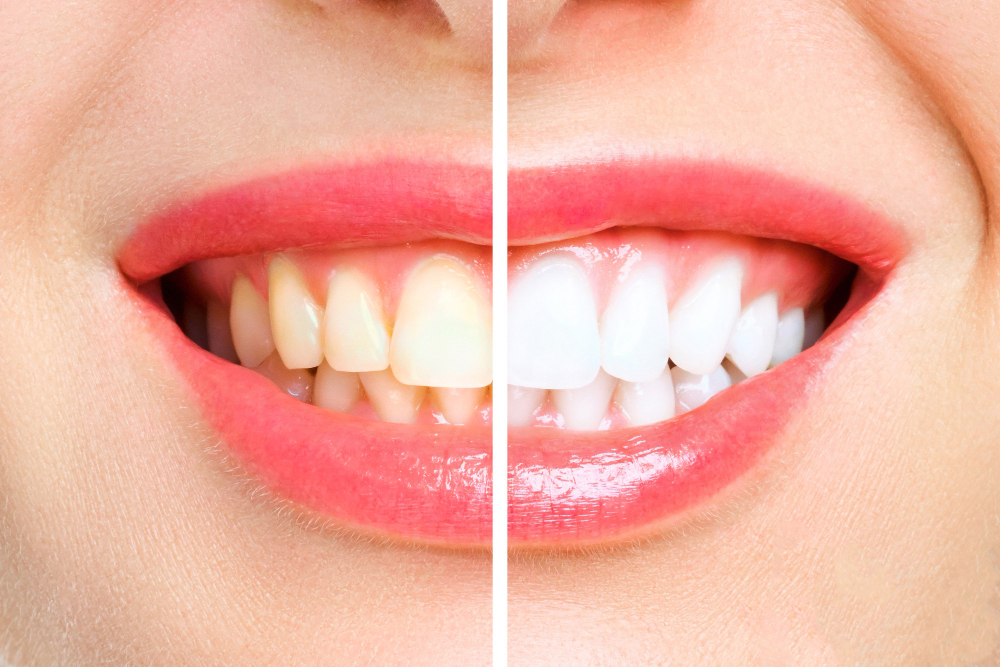
You put time and money into whitening your teeth. The results came out well. Now the real question settles in: how long is this actually going to last?
It is one of the most searched questions after a whitening treatment, and for good reason. Nobody wants to invest in a brighter smile only to watch it fade back to its original shade within a few months. The answer, however, is not a single number. It depends on a handful of factors that are worth understanding before you go in for treatment and after you come out.
This guide is written for patients in Woodbridge and Vaughan who want a clear, straightforward picture of what professional teeth whitening delivers and what it takes to protect those results over time.
Why Teeth Discolour in the First Place
To understand how whitening works and why it fades, you first need to understand what causes discolouration.
Tooth enamel, despite appearing solid, is porous. Over time, it absorbs pigments from the foods and drinks you consume regularly. Coffee, tea, red wine, and dark sauces are the most common contributors. Tobacco use adds another layer of stubborn staining that sits both on the surface and deeper within the enamel.
There is also a distinction between the two types of discolouration. Extrinsic staining sits on the outer surface of the tooth and is generally more responsive to whitening treatments. Intrinsic discolouration originates from within the tooth structure itself, often caused by certain medications taken during tooth development, trauma, or excessive fluoride exposure in early childhood. Whitening works well on extrinsic staining. Its effectiveness on intrinsic staining is more limited and depends heavily on the severity of the case.
Understanding which type you are dealing with is something a dentist should assess before any treatment begins.
How Long Do Results Last?
For most patients who receive professional teeth whitening in Woodbridge, results last anywhere from one to three years. That range exists because individual habits, diet, and oral hygiene play a significant role in how quickly re-staining occurs.
In-Office Whitening
In-office whitening uses a higher concentration of bleaching agent applied directly by a dental professional. Results are immediate and typically more noticeable after a single session. Because the treatment is more controlled and concentrated, the initial results are often more dramatic than at-home options.
Take-Home Whitening Trays
Custom tray whitening involves wearing a dentist-provided tray filled with whitening gel for a prescribed period each day over one to two weeks. Results develop more gradually but are equally effective for most patients. The added benefit of take-home trays is the ability to do minor top-ups periodically, which can extend the overall brightness of your smile without requiring a full repeat treatment.
Both approaches have their place depending on the patient’s schedule, current shade, and how much change they are looking to achieve.
What Determines How Long Your Results Hold
Several factors directly influence whether your whitening results last one year or closer to three.
What You Eat and Drink
Diet is the single biggest factor post-treatment. Coffee, tea, red wine, tomato-based sauces, berries, and dark sodas are all high in chromogens, the compounds that bind to enamel and cause staining. Acidic foods and drinks compound the problem by temporarily softening enamel, making it more susceptible to absorbing pigment.
This does not require eliminating these foods. Being mindful of frequency and rinsing your mouth with water after consuming them makes a genuine difference over time.
Tobacco Use
Nicotine and tar cause some of the deepest, most stubborn staining available. Patients who smoke or use tobacco consistently report faster fading of whitening results compared to non-smokers. This is one area where lifestyle has a direct and measurable impact on how long results hold.
Daily Oral Hygiene
Brushing twice daily and flossing regularly removes surface buildup before it has the chance to penetrate deeper into the enamel. Using a whitening toothpaste two to three times per week can help maintain surface brightness, though it is worth noting that whitening toothpastes work primarily on surface stains and cannot replicate what professional treatment achieves.
Natural Tooth Characteristics
Some people have naturally thicker, more translucent enamel that responds well to whitening and holds results longer. Others have thinner enamel or deeper intrinsic staining that limits how bright the teeth get and how long that brightness holds. In cases where whitening consistently underdelivers, a dentist may suggest alternatives such as porcelain veneers in Woodbridge, which are stain-resistant by nature and offer a longer-lasting solution for certain types of discolouration.
Practical Steps to Maintain Your Results
These are not complicated habits. The patients who maintain their whitening results longest tend to follow a few consistent practices.
Rinse with water after staining foods and drinks. You do not need to brush immediately after eating as this can spread acids across the enamel surface. A simple water rinse removes a significant amount of residue.
Use a straw for cold beverages. This reduces direct contact between dark liquids and the front surfaces of your teeth, where staining is most visible.
Stay current with hygiene appointments. Professional cleanings at a dental clinic in Woodbridge remove calculus and surface buildup that contribute to dullness and discoloration over time.
Schedule touch-ups at appropriate intervals. Most dentists recommend revisiting whitening every twelve to eighteen months depending on lifestyle. Patients with take-home trays often need only a small top-up rather than a full course of treatment.
Avoid over-whitening. Treating too frequently in search of a whiter result than the treatment can realistically deliver leads to sensitivity and can weaken enamel over time. Follow the interval your dentist recommends rather than whitening whenever you feel the results have dimmed slightly.
When Whitening Is Not the Right Option
Whitening works on natural tooth enamel only. It has no effect on existing restorations such as crowns, veneers, or composite bonding. If you have visible restorations on your front teeth, whitening the surrounding natural enamel can create a noticeable colour mismatch.
There are also patients whose discolouration stems from causes that whitening cannot address effectively. Deep intrinsic staining caused by tetracycline antibiotics or developmental factors may show limited improvement with bleaching. In these situations, a different approach within cosmetic dentistry in Woodbridge is often more appropriate and more satisfying in terms of outcome.
A thorough clinical assessment before committing to any whitening treatment ensures you have a realistic understanding of what the results will look like for your specific teeth.
FAQ
How long after whitening should I avoid staining foods?
Most dentists advise avoiding highly pigmented foods and drinks for at least 48 hours after treatment. The enamel is more porous immediately following whitening and more susceptible to re-staining during this period.
Is professional teeth whitening safe for enamel?
When carried out or supervised by a qualified dentist, professional whitening is considered safe. Sensitivity after treatment is common and is typically temporary. Products used in a clinical setting are formulated to whiten without causing lasting enamel damage when applied correctly.
How much does teeth whitening cost in Woodbridge?
Costs vary depending on the type of treatment and the clinic. In-office whitening generally costs more than take-home options. Your dentist will outline the costs clearly during a consultation before any treatment begins.
Can whitening fix all types of tooth discolouration?
No. Whitening is most effective on extrinsic staining caused by diet and lifestyle. It has limited effectiveness on intrinsic staining caused by medication, trauma, or structural factors. An assessment by a dentist will clarify what is achievable in your specific case.
How often can I safely whiten my teeth?
A reasonable general guideline is a full treatment every twelve to eighteen months, with minor top-ups as needed in between. Following your dentist’s specific recommendation is more reliable than a general schedule, since individual enamel condition and lifestyle vary considerably.
Final Thought
Professional teeth whitening produces results that are visible and, with consistent maintenance, can last well beyond what most patients initially expect. The key is understanding what influences fading, making small but consistent adjustments to daily habits, and approaching touch-ups at sensible intervals rather than reactively.
For patients in Woodbridge and Vaughan who want to understand whether whitening is suitable for their situation or how to get more from existing results, speaking with a dentist is the most reliable starting point. You can learn more about teeth whitening in Woodbridge or reach out to West Vaughan Dental through the Contact Us page to arrange a consultation.